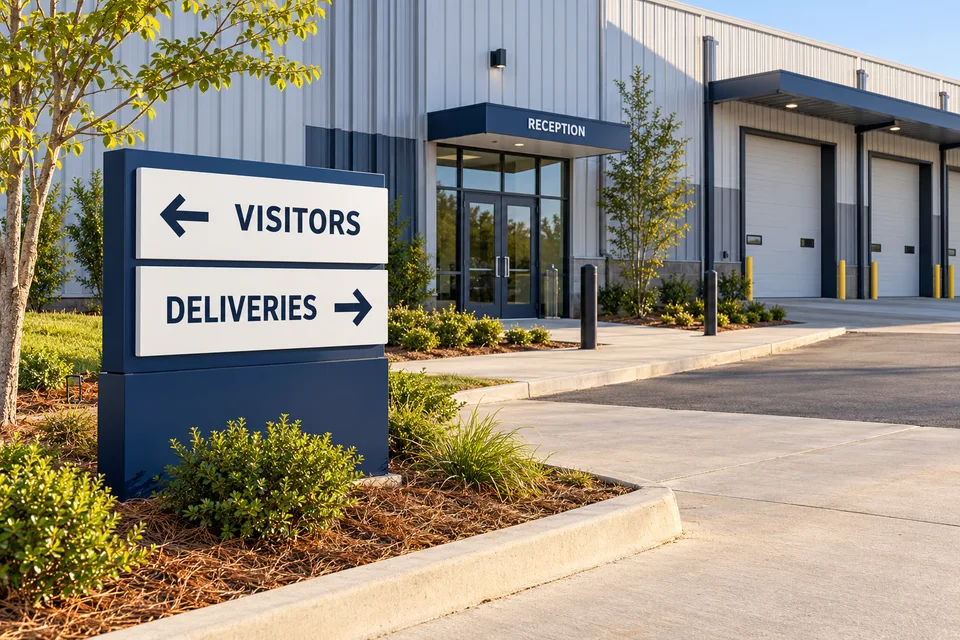
At a manufacturing facility, the business name is usually the stable part of an arrival. The person meeting a visitor, the reception hours and the place a contractor should report may change. When those details are handled by a growing collection of paper notes, a newcomer has to decide which instruction is current. A better reception brief separates the lasting identity from the information the team actually updates.
Describe three real arrival situations
Ask the reception and operations teams to describe an ordinary daytime appointment, an arrival near shift change and a visitor who reaches the door when the desk is unattended. Record what should happen in each case. Use the procedure the facility has approved; signage should explain that procedure rather than invent a new one.
The useful result is a short message map: where someone waits, how they announce themselves and who manages the next step. For a manufacturing sign project in Duncan, this conversation can identify a missing instruction before a new panel is designed.
Separate the permanent sign from the changing instruction
A reception identity may stay in place for years. A contact name, desk schedule or temporary reporting point may not. Putting both on one difficult-to-update surface makes a small operational change into a graphics project. Consider a permanent heading with a separate, controlled place for the current instruction.
For example, the lasting message might identify “Visitor reception.” The changeable element can explain the approved check-in method or revised desk hours. Avoid printing several possible procedures together and asking the visitor to work out which one applies. The sign should have an owner who is responsible for keeping that element current.
Use one vocabulary across the handoff
If appointment emails say “Front office,” a gate sign says “Administration” and the entrance says “Reception,” visitors may wonder whether these are separate places. Choose the destination name the business wants to use and apply it consistently. The same principle applies to contractors, recruitment appointments and guests attending a meeting.
A coordinated set of interior signs can carry that vocabulary from the entrance to the waiting or meeting area. It does not require every sign to display the entire logo lockup. The practical instruction should be easy to distinguish from the brand identity.
Walk the entrance during the handoff
Review the signs at the time the procedure is most likely to be unclear. Observe from permitted visitor areas without interrupting staff or entering restricted workspaces. Check the message with the door open and closed, and see whether a person standing at the approved waiting point can read it.
- Is the check-in instruction visible before someone tries the wrong door?
- Does an older notice contradict the current process?
- Is the contact method usable without knowing an employee’s personal number?
- Can the team replace a temporary instruction without covering the permanent identity?
These questions keep the project focused on the reception experience. Operational safety signs, access controls and facility procedures need their own responsible review; a new welcome sign should not be asked to replace them.
Hand over a message system, not just artwork
Before approving production, agree the wording, the person who can change it and the format for future updates. Keep a simple record of the final messages and locations. That gives the next shift supervisor or office administrator a starting point when staffing or reception arrangements change.
Our manufacturing signage page connects reception planning with exterior identity and departmental directions. To scope a practical update, gather entrance photographs, the approved visitor procedure and examples of the appointment messages already being sent. Then request a manufacturing sign quote with the handoff you want the signage to clarify.