An old sign does not automatically need complete replacement, and a fresh face does not automatically solve its problems. The useful question is what the business needs the sign to do now. A change of tenant, faded identity, damaged structure or confusing location can each call for a different response. Start by separating the message from the physical sign and its position.
Identify the problem you are trying to solve
Write down what is wrong in practical terms. Is the name outdated? Is the sign difficult to see from the approach? Has lighting become inconsistent? Is the graphic crowded or the support in poor condition? A photographic record from both close range and the arrival route makes those problems easier to discuss.
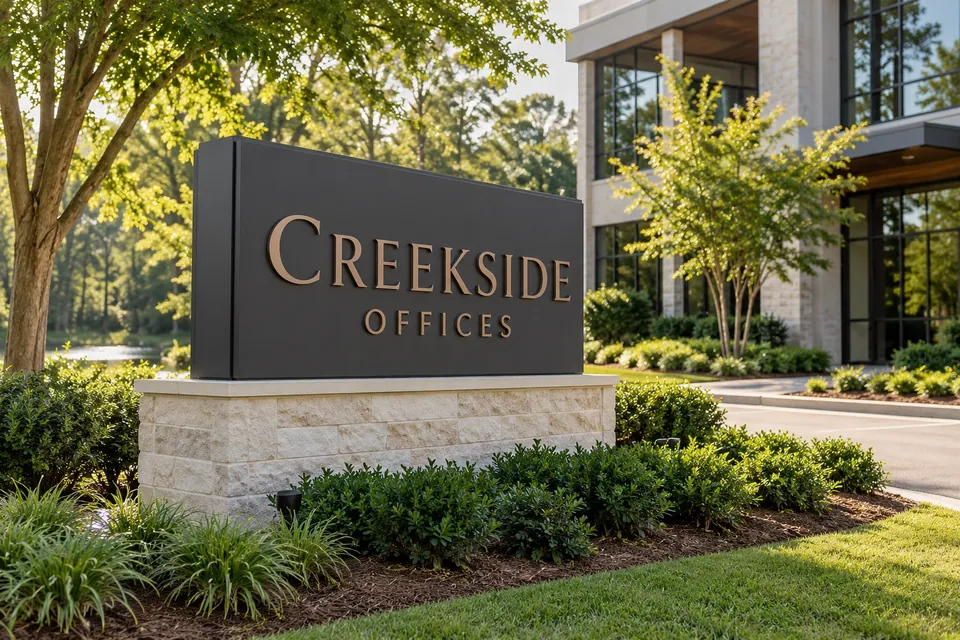
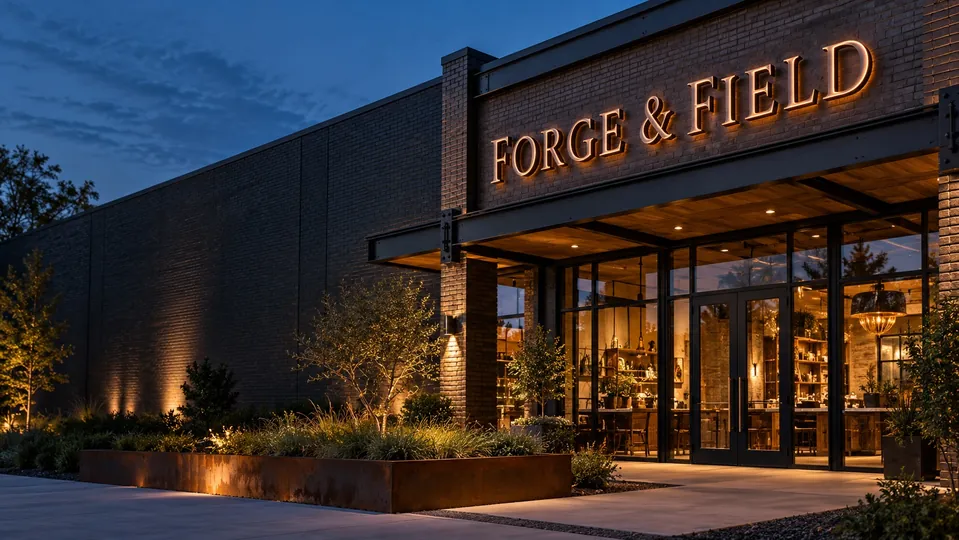
For a Gaffney building sign update, the existing facade and sign hardware should be part of the brief. For a Lyman monument sign, include the base, surrounding landscape and visitor approach as well as the face.
Separate components that might be retained
A sign can include a foundation or base, structural elements, enclosure, graphic face, lettering, electrical parts and mounting hardware. These do not necessarily have the same condition or suitability for the next design. Ask what needs assessment before a reuse decision can be made.
Existing cabinet signs and monument structures can sometimes form part of an update. That possibility should be evaluated against the actual dimensions, condition, proposed appearance and applicable requirements rather than assumed from a photograph.
Check whether the old location still makes sense
A new name placed on an old sign will inherit the old sightline. Landscaping, entrances, neighboring development or the way customers use the property may have changed. Review where someone first needs the identity and whether the sign serves that point effectively.
If the business name is readable but visitors choose the wrong door, a supporting directional or entrance message may address the real gap. Replacement is more useful when it responds to a clear arrival problem instead of simply repeating the previous layout with new artwork.
Include removal and making good
Ask what will be visible when the old sign comes down. Attachment holes, uneven paint, redundant brackets and unused power arrangements may affect the finished result. Clarify the scope for removal, disposal, surface work and installation so the new sign is not considered separately from the surrounding premises.
- Which components are proposed for reuse?
- Which require inspection or confirmation?
- What is included in removal and surface preparation?
- How will servicing or later graphic updates be handled?
Compare complete options
A fair refresh-versus-replace discussion compares the intended outcome, retained components, new materials, installation and remaining uncertainties. Avoid assuming that the smaller-looking change must always be the better value. Reworking an unsuitable structure can introduce work that is not visible in the finished graphic.
Our project checklist explains what to gather. Send the existing sign, its surroundings and the new artwork through the quote request page. We can then discuss an update around what should change, what can reasonably stay and how the business needs to be recognized next.